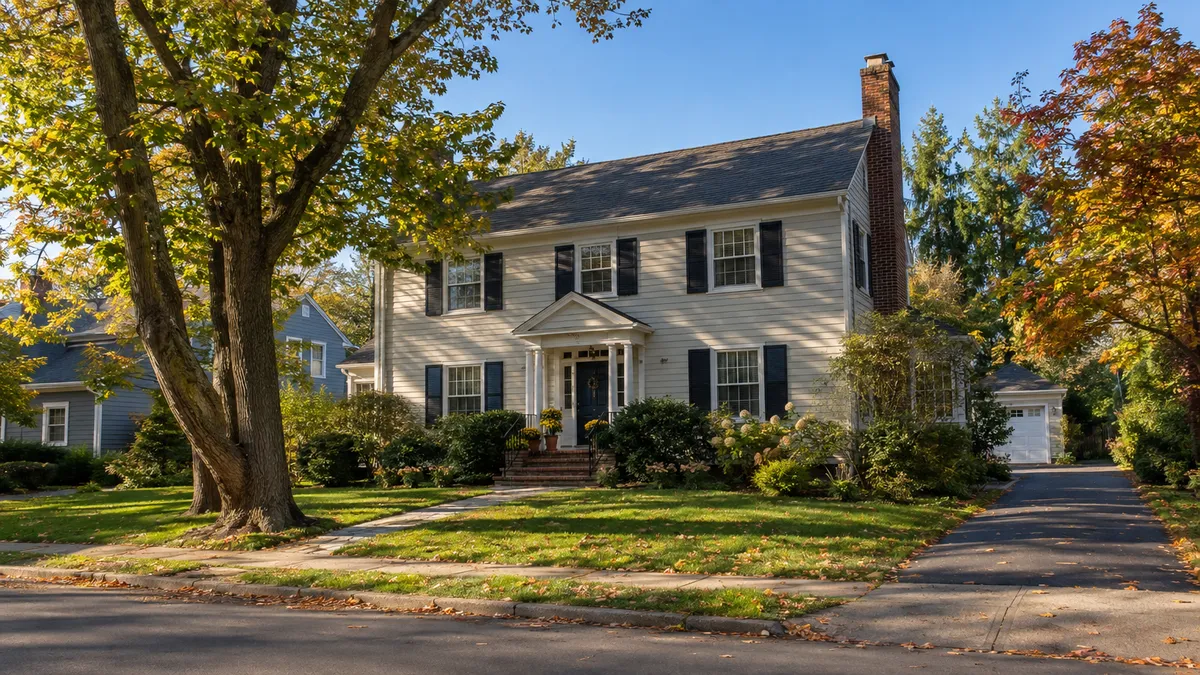
Property Taxes in the Capital Region: What Home Buyers in Albany and Saratoga Should Know
Property taxes are one of the biggest ongoing costs of homeownership in New York. Here's a plain-language breakdown of how they work, what affects your bill, and what Capital Region buyers should review before closing.
Property Taxes Are One of the Biggest Costs of Owning a Home in New York
If you're buying a home in Albany, Saratoga, or anywhere in the Capital Region, the purchase price is only part of what you'll pay. New York has some of the highest property taxes in the country, and for many homeowners, the annual tax bill rivals or exceeds what they pay in mortgage interest over the same period.
Understanding how property taxes work before you make an offer can help you budget accurately, avoid surprises after closing, and ask the right questions during your home search.
How Property Taxes Work in New York State
Property taxes in New York are set and collected at the local level — not by the state. That means your tax bill depends on where, exactly, your home sits: which county, city, town, village, or school district.
Your annual bill is calculated using two primary factors:
- Assessed value: The value your local assessor assigns to your property, which may or may not match what you paid for it or what it would sell for on the open market today.
- Tax rate (mill rate): The rate applied to your assessed value by each taxing jurisdiction — your county, town or city, school district, and sometimes a village or special district on top of that.
Many New York municipalities assess property at a fraction of full market value. That fraction is called the equalization rate, and it varies from one municipality to the next. The New York State Department of Taxation and Finance publishes equalization rates annually so buyers and homeowners can understand how local assessments compare to current market values in that area.
Why Rates Vary Significantly Across the Capital Region
One of the most important things to understand when buying in this area is that property tax rates differ substantially from one community to the next — sometimes dramatically, even between neighboring towns.
In the Capital Region, your effective tax rate is influenced by:
- Which school district your property falls in — school taxes typically represent the largest share of a total property tax bill in New York
- Whether you're in a city, town, or village — each layer of local government may add its own tax rate
- The local equalization rate used by your municipality's assessor
- Whether the municipality has recently completed a reassessment of properties in that area
Albany County, Saratoga County, Rensselaer County, and Schenectady County each operate under their own taxing structures. Within each county, dozens of towns, villages, and school districts add their own rates. Two homes with the same purchase price, located in different school districts — or even different parts of the same town — can carry very different annual tax obligations.
Before committing to a specific property, it's worth reviewing the actual tax bill rather than estimating based on a county average.
How to Find a Property's Current Tax Bill
New York State makes property tax information publicly accessible. Here are the most reliable ways to look up a property's tax situation before making an offer:
- Ask your real estate professional. An experienced agent can request copies of recent tax bills or pull the information from public records as part of the home search process.
- Use the NYS Real Property Tax Service resources. The New York State Office of Real Property Tax Services (ORPTS) maintains public data on assessments, equalization rates, and local tax information across the state.
- Review listing disclosures. In New York, sellers are required to provide certain property disclosures. Tax information or assessment data may be included or available upon request.
- Contact the local assessor's office directly. Each town and city has an assessor who can confirm the current assessed value, applicable tax rates, and any exemptions currently attached to the property.
What Happens to Taxes After You Buy
This is where many buyers are caught off guard — and it's worth slowing down to understand before you close.
The tax bill on a listing may reflect exemptions the current owner receives that do not automatically transfer to you as the new buyer. The most common example is the STAR exemption (School Tax Relief program), which reduces school property taxes for primary-residence homeowners in New York State.
If the current owner receives STAR and you have not yet applied, your first tax bill as the new owner could be higher than what the seller was paying. STAR is administered through the NYS Department of Taxation and Finance, and new homeowners typically need to register for the program separately after taking ownership — it is not transferred at closing.
Other exemptions that may exist on a property — such as veterans' exemptions, senior citizens' exemptions, or agricultural exemptions — are generally specific to the individual who qualified for them and do not pass to a new owner automatically.
Always confirm which exemptions are currently on the property and whether you will qualify to reapply for them after closing.
Property Taxes and Your Monthly Mortgage Payment
If you're financing your home purchase with a mortgage, your lender will most likely require you to fund an escrow account. Each month, a portion of your mortgage payment is set aside in that account, and your lender pays the property tax bill on your behalf when it comes due.
This means your total monthly housing cost — often referred to as PITI (principal, interest, taxes, and insurance) — will be higher than just your principal and interest payment alone. When calculating what you can comfortably afford, property taxes need to be part of that conversation from the beginning of your search, not after you've already fallen in love with a house.
Lenders typically estimate your escrow contribution based on the current tax bill. If that bill is expected to change after closing — because you won't qualify for an exemption the seller had, or because a reassessment is underway — your monthly escrow payment may be adjusted upward at the next annual review.
Understanding the Property Tax Grievance Process
If, as a homeowner, you believe your property has been assessed at a value higher than its actual market value, New York State allows you to challenge that assessment through a process called a grievance. Each municipality has a filing deadline — typically in May — to submit a grievance with the local Board of Assessment Review.
As a buyer, you generally cannot file a grievance on a property you don't yet own. However, if you purchase a home and later believe the assessed value doesn't reflect actual market conditions, you can consider filing during the next available grievance period after you've taken ownership.
This is a legitimate option, but not a guaranteed outcome. The process has specific requirements and timelines, and results vary. If you're considering pursuing a grievance, speaking with a local attorney or tax professional familiar with New York assessment procedures is advisable.
A Practical Checklist for Capital Region Home Buyers
Before closing on any home in Albany, Saratoga, or the surrounding Capital Region communities, work through these steps:
- Request the actual tax bill. Don't rely on an estimate or an online tool. Get the most recent full-year tax bill for the specific property.
- Confirm all active exemptions. Find out which exemptions the current owner receives and which, if any, you can reapply for after closing.
- Plan to register for STAR after closing. If the property will be your primary residence, look into the STAR program through the NYS Department of Taxation and Finance promptly after taking ownership.
- Factor taxes into your full monthly budget. Use the actual annual tax total — adjusted for any exemptions you won't carry forward — when calculating your realistic monthly housing cost.
- Compare tax obligations across the homes you're considering. Two similarly priced homes in different towns or school districts can carry meaningfully different annual tax burdens.
- Ask your lender about escrow adjustments. Understand how your lender calculates your initial monthly escrow and what triggers a change in that amount after closing.
Talk Through Your Home Search With Tier One Real Estate
Property taxes are a significant part of owning a home in the Capital Region, and they're one of the factors that can genuinely shift how a particular property fits your actual budget. Getting accurate tax information early in your search — before you're emotionally committed to a specific home — is one of the most practical moves a buyer can make.
If you're researching homes in Albany, Saratoga, or anywhere in the Capital Region and want a straightforward conversation about what you're really looking at — including the full cost picture — Tier One Real Estate is here to help. Reach out and let's talk through your home search.
This article is intended for general educational purposes and does not constitute tax, legal, or financial advice. Property tax rules, rates, and exemption programs can change. Consult a qualified tax professional, attorney, or your local assessor for guidance specific to your situation.
