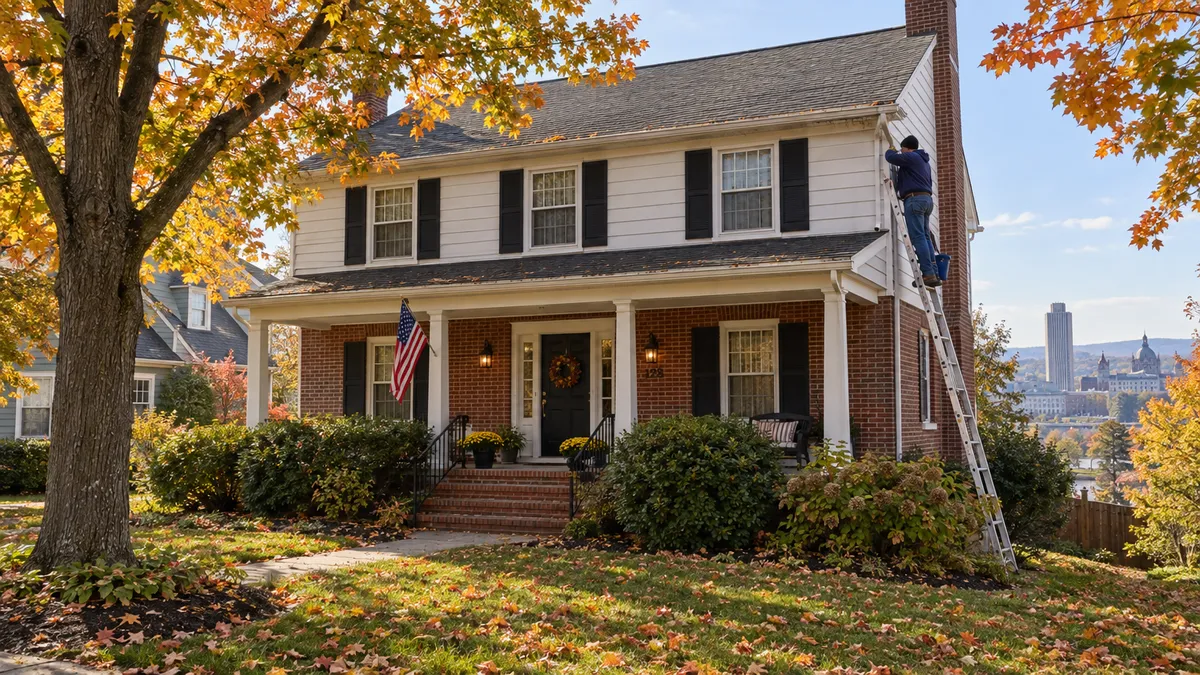
Fall Home Maintenance Checklist for Albany and Capital Region Homeowners
Upstate New York does not ease into winter gradually. One week you are raking leaves, and a few weeks later you are dealing with frozen pipes, ice dams, and a heating system that has not been tested since April. For homeowners in Albany, Saratoga, and the broader Capital Region, fall is the most important time of year to tend to your property.
Whether you have owned your home for two years or twenty, this checklist gives you a practical starting point. None of it requires a contractor for every task, but some of it absolutely does, and we will point that out as we go.
Why Fall Maintenance Matters More in Upstate New York
The Capital Region climate is unforgiving. Albany regularly sees temperatures dip well below freezing from November through March, and ice storms, heavy snow loads, and freeze-thaw cycles put real stress on homes that have not been properly prepared. The difference between a well-maintained home heading into winter and a neglected one can be thousands of dollars in repairs, or a disrupted sale if you are planning to list in the spring.
Taking a few hours now to work through this checklist is almost always cheaper and less stressful than dealing with the consequences later.
Exterior: What to Check Before the Cold Arrives
Gutters and Downspouts
Clean gutters are one of the most important fall tasks for any homeowner in a region with heavy leaf fall and significant snowfall. Clogged gutters cannot drain properly, which leads to ice dams. Ice dams form when heat escapes through your roof, melts snow, and the meltwater refreezes at the eave, backing up under shingles and potentially causing interior water damage.
- Clear all leaves and debris from gutters after most trees have dropped their leaves, typically mid-to-late October in the Capital Region.
- Check that downspouts drain water away from the foundation, not toward it.
- Look for sagging sections or loose hangers that may have shifted during summer.
Roof Inspection
You do not need to get on the roof yourself. Binoculars from the ground or photos from a safely accessible angle can reveal a lot. Look for missing or curling shingles, damaged flashing around chimneys and vents, and any visible sagging. If something looks off, get a licensed roofer to take a look before the first snowfall.
Foundation and Grading
Walk the perimeter of your home and look for cracks in the foundation, gaps where pipes or utilities enter the house, and areas where the ground slopes toward the structure rather than away from it. Water pooling against a foundation during freeze-thaw cycles can cause real damage over time. Fill small cracks with appropriate sealant and address grading issues before the ground freezes.
Exterior Caulking and Weatherstripping
Check the caulk around windows, doors, and any exterior penetrations. Gaps and deteriorated caulk allow cold air in and conditioned air out, raising your heating bills. Weatherstripping on exterior doors is inexpensive to replace and makes a noticeable difference. This is a straightforward DIY task for most homeowners.
Driveway and Walkways
Seal any cracks in asphalt driveways before freezing temperatures arrive. Water that penetrates cracks expands when it freezes and accelerates deterioration. Check concrete walkways and steps for heaving or damage that could become a safety hazard once ice arrives.
Heating System: Do Not Wait Until the First Cold Night
Schedule a Furnace or Boiler Tune-Up
This is the single most important fall task for most homeowners. Have a licensed HVAC technician inspect and service your furnace or boiler before you need it. In the Capital Region, HVAC companies get booked quickly once October arrives, so scheduling in September or early October gives you more flexibility and reduces the risk of discovering a problem when temperatures first drop.
A professional tune-up typically includes cleaning the system, checking for carbon monoxide leaks, inspecting the heat exchanger, and verifying that the system is operating safely and efficiently.
Replace Furnace Filters
Replace your furnace filter now and check the manufacturer recommendation for how often to change it during heating season. A clogged filter reduces efficiency and puts extra strain on your system.
Test Your Thermostat
Turn the heat on before you actually need it to confirm the system is responding correctly. If you have a programmable or smart thermostat, check that it is configured appropriately for the heating season.
Bleed Radiators If Applicable
If your home has a hot-water radiator system, which is common in many older Albany-area homes, bleed the radiators at the start of the heating season to release trapped air. This ensures the system heats evenly and efficiently.
Plumbing: Protect Your Pipes
Frozen pipes are one of the most common and most preventable winter problems in Upstate New York.
- Disconnect and drain outdoor hoses. Leaving a hose attached to a spigot can cause the interior pipe to freeze even if the spigot itself is frost-free.
- Shut off and drain exterior irrigation systems. If your home has an in-ground sprinkler system, have it blown out by a professional before the first hard freeze.
- Insulate exposed pipes in unheated areas such as crawl spaces, garages, or near exterior walls. Foam pipe insulation is inexpensive and widely available.
- Know where your main water shutoff is located. If a pipe freezes and bursts, being able to shut off the water quickly limits the damage significantly.
Inside the Home: A Few More Items Worth Checking
Chimney and Fireplace
If you use a wood-burning fireplace or stove, have the chimney inspected and cleaned annually by a certified chimney sweep. Creosote buildup is a fire hazard, and animals sometimes nest in chimneys during warmer months. Gas fireplace inserts should also be inspected periodically to confirm safe operation.
Smoke and Carbon Monoxide Detectors
Fall is a good time to test every smoke detector and carbon monoxide detector in your home and replace batteries as needed. With windows closed and heating systems running, carbon monoxide risk increases in winter. Working detectors are essential.
Attic Insulation and Ventilation
Adequate attic insulation and ventilation help prevent ice dams, reduce heating costs, and keep your home comfortable throughout winter. If you are unsure how much insulation you have or whether your attic is properly ventilated, an energy auditor or insulation contractor can assess it. New York State homeowners may qualify for energy efficiency rebates or assistance programs through NYSERDA. Their website at nyserda.ny.gov has details on current offerings for residential properties.
Reverse Ceiling Fans
Most ceiling fans have a reverse switch that makes them spin clockwise at low speed during winter, pushing warm air that has risen to the ceiling back down into the living space. It is a small efficiency gain that costs nothing to implement.
If You Are Thinking About Selling in the Spring
Fall maintenance is not just about comfort and avoiding emergency repairs. It is also an investment in your home's condition and presentation. Buyers who tour a home in spring or early summer notice deferred maintenance quickly. Stained ceilings from ice dams, aging HVAC systems, cracked foundations, and deteriorated caulk all come up during inspections and affect how buyers perceive the property.
Getting ahead of these items this fall puts you in a much stronger position if you are considering listing next year. It also gives you time to address anything significant without the pressure of an active listing.
If you are thinking about where your home stands and what might be worth addressing before selling, Tier One Real Estate can help you think through those decisions. There is no obligation, just a straightforward conversation about your property and your options.
Work Through the List Gradually
Not every item on this checklist needs to happen in the same weekend. Prioritize the tasks with the highest consequence if ignored: your heating system, pipes, gutters, and roof. Work through the rest as time allows through October.
The goal is not perfection. It is catching the problems that become much more expensive and stressful once temperatures are below freezing and contractors are harder to schedule. Your home is one of your most important assets. A few hours invested in fall maintenance protects that asset through the winter and sets you up well for whatever comes next.
Have questions about your home or thinking about what it might take to prepare for a future sale? Talk with Tier One Real Estate. We are happy to share what we are seeing in the Capital Region market and help you think through your options. Visit t1-realestate.com to get in touch.
